
Pre-Purchase Building Inspection Sydney.
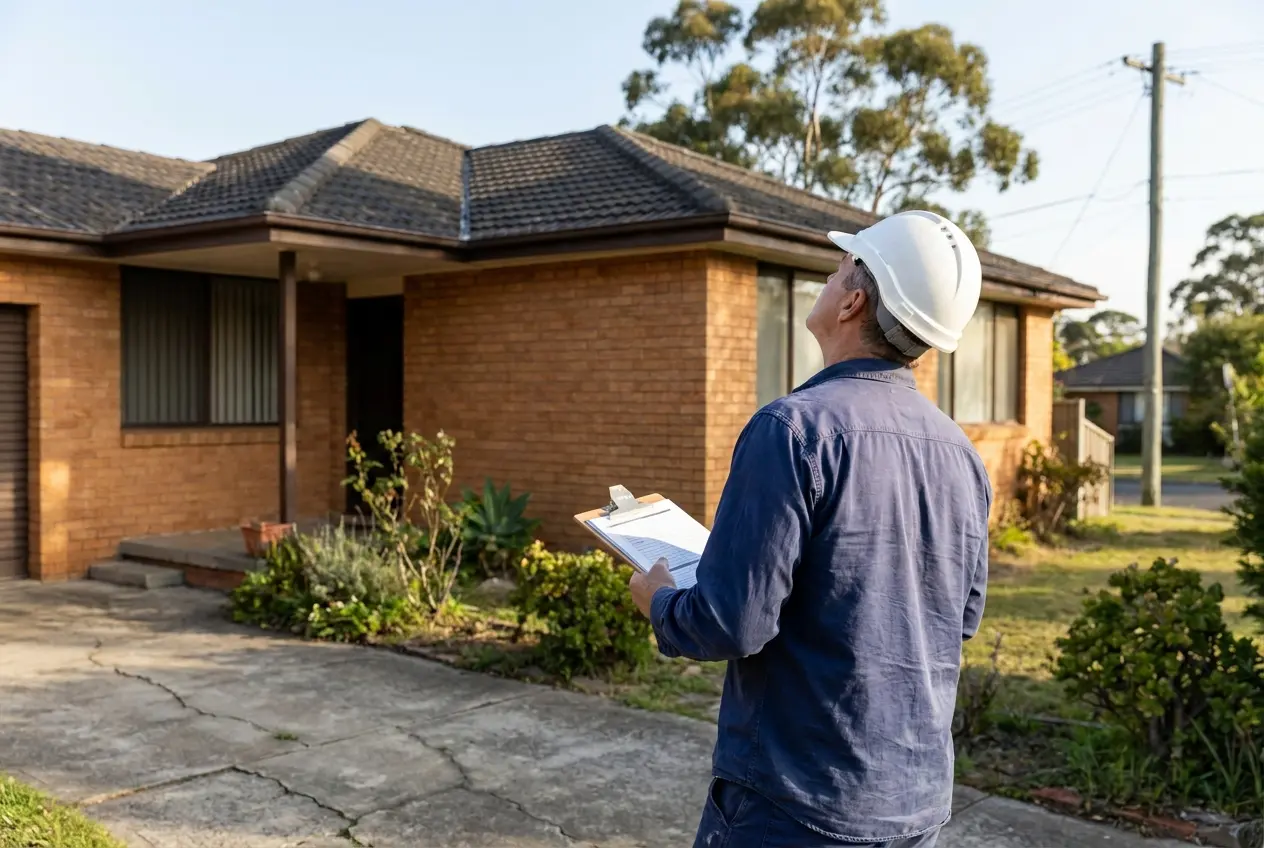
You’ve had an offer accepted, and the cooling-off clock is already running. We inspect the structure and the timber pests in 1 visit and put a photographed report in your inbox the same day, with the major items separated from the minor ones, so you can negotiate, ask for repairs or walk away in time.
Same-Day Report
Written up, photographed and emailed.
Drone, Thermal, Moisture
On every inspection, no extra charge.
1 Visit, 1 Report
Building and timber pest together.
5.0 On Google
From 30 reviews.
Same-Day Report.
Drone, thermal camera and moisture meter on every inspection, at no extra charge.
Same-day report · Timed to your cooling-off period
Book Your Inspection
5.0 from 30 Google reviews · Licensed builder · Timber pest trained · $5M public liability
Drone, Thermal, Moisture Meter
On every inspection, no extra charge
$5,000,000 Public Liability
$2,000,000 professional indemnity
Same-Day Report
Photographed and emailed
5.0 On Google
30 reviews, Sept 2026
Nothing Obvious Turns Up After Settlement.
Read enough 1-star reviews of Sydney building inspectors and the same story repeats. The inspector missed something a layperson could see, the buyer found it after settlement with an $8,000 repair attached, and the phone call afterwards got “inaccessible”, “visual only” and the fine print. The caveats are read as a con because, in those stories, they were used as one.
So here is the method, in plain English. We inspect the roof void and the subfloor wherever there is safe access, and if we can't get in we say so in the report, and why. Drone, thermal camera and moisture meter on every inspection, at no extra charge.Every finding is photographed, rated, and written so a first-home buyer with no building background can tell what matters from what doesn’t. And the inspector who was on site, Ibrahim, is the person you talk to about the findings. After-report care is part of every inspection.
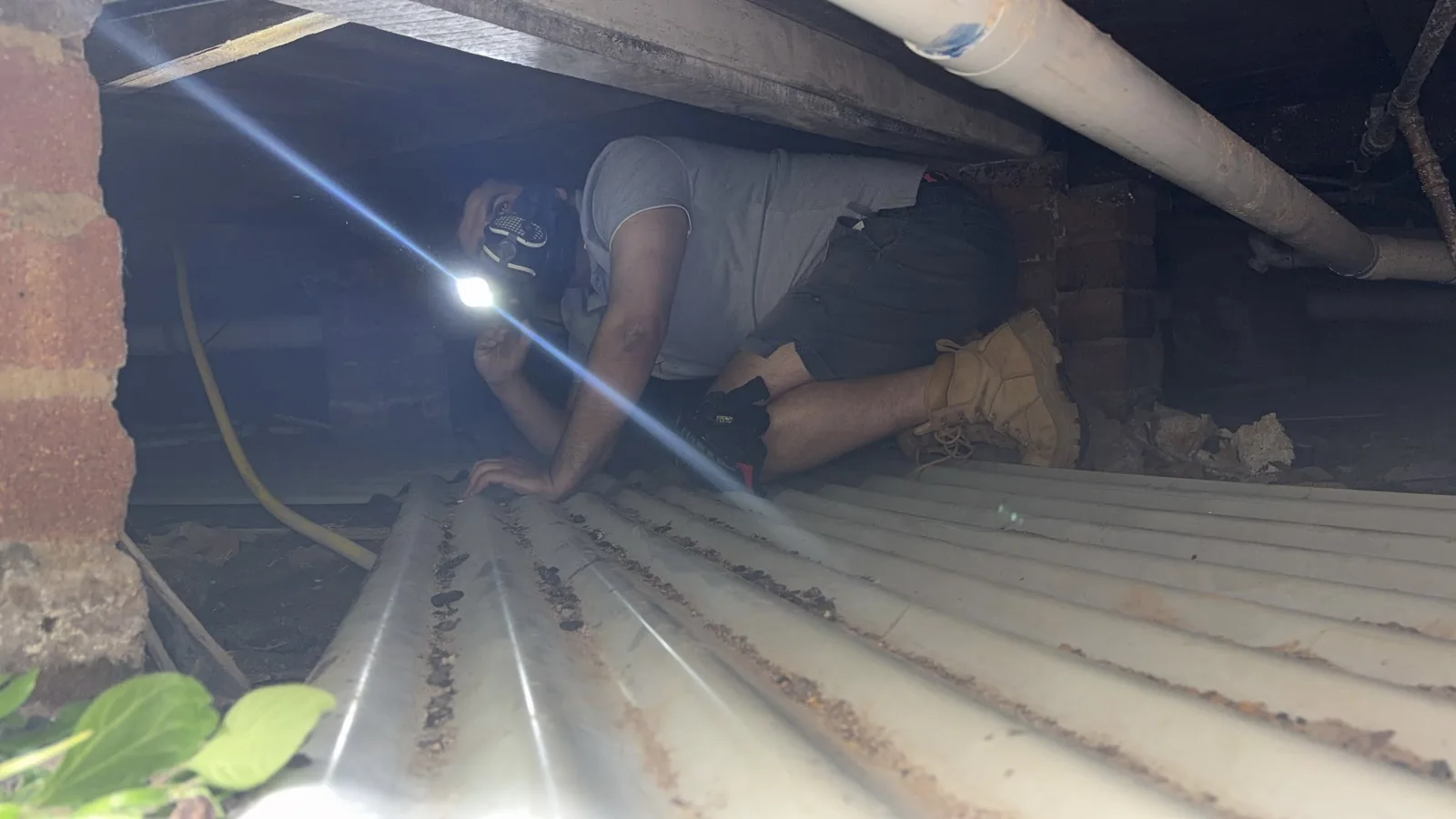
The full zone-by-zone scope (roof exterior, roof void, external walls and site, subfloor, interior, wet areas, garages, sheds, retaining walls, steps, fencing and drainage) is on the building and pest inspection Sydney page, and element by element in the what a building inspection covers guide.
Drone, Thermal Camera And Moisture Meter, At No Extra Charge.
0 of the 6 pages ranking for this search promise the equipment as included. We do, because it's what finds the things a torch and a ladder can't.
The drone
Flies the roof exterior on every job: broken tiles, rusted valleys, lifted flashings, blocked gutters and the ridge capping, on roofs nobody can safely stand on. It also sees the rear elevation and the neighbour's side you can't reach from the ground.
The thermal camera
Reads temperature differences on a wall or ceiling. A cold patch behind a shower wall, a damp line at a slab edge, or moisture in a ceiling under a valley iron shows up before it is visible to the eye, and the moisture meter then confirms it.
The moisture meter
Puts a number on damp. Skirtings, wet-area walls, the subfloor timbers and the base of external walls get read, not guessed, so 'possible moisture' in the report is a reading, not an impression.
Vijith Jayarajan, Google review: “I was particularly impressed with the level of detail in the inspection, including the use of thermal imaging and drone photography to assess areas that can be difficult to inspect through a standard visual inspection.”
A Report You Can Act On, The Same Day.
A 90-page PDF that buries the 1 item that should make you walk away is the second most common complaint in this trade, after missing it altogether. The report is organised the other way round. A report to this standard typically opens with a summary that separates major defects and safety hazards from minor and cosmetic items, then works through the property area by area, with a photo and a plain-English note on each finding and what to do about it.
Where we couldn’t get in (a locked shed, a roof void with no manhole, a subfloor with 200mm of clearance) the report says so, and says why, rather than leaving the area out and hoping you don’t notice. That is the honest version of “inaccessible”, and it is written that way on purpose.
How to read one, section by section, is in the building inspection report explained guide.
- Summary page: major, minor, safety hazards, separated
- Every finding photographed and rated
- Area-by-area findings in buyer language, not trade jargon
- Timber pest findings, conducive conditions included
- Access limitations stated, with the reason
- In your inbox the same day
Want to see a real one before you book? Download 2 sample reports, address removed and watermarked. Any inspector who won’t show you a sample report is telling you something.
Settling Soon? Get The Report Before The Deadline.
Building and timber pest in 1 visit, your report the same day. A firm price before anything is booked.
Fitting It Inside Your NSW Cooling-Off Period.
Most NSW private-treaty buyers get 5 business days from exchange, ending at 5pm on day 5. Auction purchases usually get none. Your conveyancer confirms what your contract says; our job is to fit inside it.
- Day 0 to 1
Exchange, then book
Call the day you exchange, or before. Say you're in cooling-off and we work to that date.
- Day 1 to 3
We inspect
Structure and timber pests in 1 visit, so there is no second appointment to wait on.
- Same day
Report, then decide
Time left to renegotiate, ask for repairs, or rescind before 5pm on day 5.
The full day-by-day plan, the 0.25% forfeiture, the auction exception and the 66W certificate are explained in the cooling-off period NSW guide. Whether to inspect before or after your offer is the before or after the offer guide.
Negotiate, Ask For Repairs, Or Walk Away.
A report with a photographed major defect and a plain note on what it means is a negotiating document. It lets you go back with a specific ask rather than a vague worry. The vendor is not obliged to fix or discount anything, and inside the cooling-off period your options are set by the contract, so the negotiation itself is a conversation with your conveyancer or solicitor, not with us.
What we do is make the findings unarguable: what it is, where it is, how bad it is, and what kind of specialist would quote the fix. The rest is in the before or after the offer guide.
“Swift and proactive with their communication and organising the building inspections. Reports were completed very quickly, and what I received was very clear, precise, and thorough. I was able to make my property purchase decisions with confidence (I rescinded on one based on their report), and gave me more points for my negotiations for my new one.”
What Changes By Property Type.
| Property | What the inspection covers | What to know |
|---|---|---|
| House | The full scope: roof exterior by drone, roof void, external walls and site, subfloor, interior, wet areas, garages, sheds, retaining walls, fences and drainage. | Older Sydney stock (fibro, interwar brick, 1970s brick veneer) has its own defects by era. The 6 area pages describe what to expect where. |
| Townhouse or villa | As for a house, for the lot and the structures that belong to it. Shared walls and common areas are inspected from your side. | Ask your conveyancer what the strata plan says about who owns the roof, the fences and the driveway, because it changes who pays for a defect. |
| Unit or apartment | Confirmed with you when you book. The form's property-type question flags it so we can scope the lot before quoting. | A strata records search (the building's history, levies and disputes) is a separate service that we don't sell. Your conveyancer arranges it. |
First-home buyers
No building background needed. The report is written for you, and you talk to the person who was on site.
Investors and upsizers
The same report, with the cost-to-fix items flagged so you can price the property, not just pass it.
Buyer's agents and conveyancers
Booking on a client's behalf is fine. The report goes to whoever you nominate, the same day.
Price depends on the size and type of the property. A standard building and pest inspection is $550 including GST ($500 plus GST). Larger or unusual properties are quoted before you book, and the figure you are given is the figure you pay. What changes it is explained on the inspection cost page.
Across Greater Sydney, From Smithfield.
6 regions, each with its own housing stock and its own page. If your suburb is not listed, send the enquiry anyway and we'll confirm.
Western Sydney
Parramatta, Blacktown, Merrylands, Fairfield. Post-war fibro and brick veneer on reactive clay.
Inspections in Western SydneyPenrith
Penrith, Glenmore Park, St Marys, Emu Plains. Brick veneer estates and the Nepean floodplain.
Inspections in PenrithHills District
Castle Hill, Kellyville, Baulkham Hills, Epping. Project homes on cut-and-fill blocks, pools and retaining walls.
Inspections in Hills DistrictSouth West Sydney
Liverpool, Campbelltown, Oran Park, Leppington. New estates inside the warranty period, and 1970s stock.
Inspections in South West SydneyCanterbury-Bankstown & St George
Bankstown, Kogarah, Hurstville, Earlwood. Interwar bungalows and semis, damp courses and termites.
Inspections in Canterbury-Bankstown & St GeorgeNorthern Beaches
Manly, Dee Why, Narrabeen, Avalon, Belrose. Salt, weatherboard, steep-block subfloors and the bush fringe.
Inspections in Northern BeachesPre-Purchase Inspection FAQs.
What is a pre-purchase inspection?
A visual, non-invasive inspection of a property you intend to buy, carried out before you are locked in, so you know its condition before you commit. On a Sydney house it means the structure (roof, walls, floors, wet areas, site drainage and outbuildings) and the timber pests (termites, borers, decay), inspected in 1 visit and written up in 1 report. It is the smallest cheque in the whole purchase, and the only one that can stop you writing the biggest.
How long does a building and pest inspection take?
Long enough to do it properly. How long depends on the size and access of the property, and we'll tell you when you book. Whatever the time on site, the report is in your inbox the same day, which is the number that matters inside a cooling-off period.
Should I get the inspection before or after my offer?
In NSW, for a private-treaty sale, the usual answer is after your offer is accepted and before exchange, or inside the 5-business-day cooling-off period. At auction there is no cooling-off, so inspect before you bid. The trade-offs of each are in the before or after the offer guide.
Can I attend the inspection?
Yes, and it helps. Being shown a finding on site beats reading about it. If you can’t attend, the photographs do the job and the inspector who was on site, Ibrahim, is the person you talk to about the findings. After-report care is part of every inspection.
What if the agent already has a report?
A vendor-supplied report was commissioned by, and paid for by, the person selling the house. It may be accurate. It was not written for you, and you have no relationship with the inspector who wrote it. Get your own. The before or after guide covers when a vendor report is worth reading and when it isn’t.
Do you inspect strata common areas?
We inspect your lot and what belongs to it. Common property (the building’s roof on an apartment block, shared driveways, the lift) is the owners corporation’s responsibility, and its history is what a strata records search reports on. We don’t provide strata searches; your conveyancer arranges one.
What isn't covered?
Anything concealed or inaccessible: inside walls, under fixed floor coverings, behind stored goods, in a roof void with no manhole. Also anything that needs its own specialist: electrical and plumbing certification, pool barrier compliance, asbestos sampling, council approvals, and repair costs. Every limitation is stated in the report with the reason, and the covers guide lists the exclusions in full.
What happens if you find a major defect?
It goes at the top of the summary, photographed, with a plain note on what it is and which specialist would quote the fix (a structural engineer for movement, a licensed pest manager for live termites, a plumber for a leak). You then have the report and the deadline; your conveyancer has the contract. Meena Ahn rescinded on 1 property from her report and negotiated on the next, which is exactly what it’s for.
Do I need it on a new build?
A new house can carry defects, and inside the NSW statutory warranty period you have rights on them. For a brand-new home the right product is usually a stage or handover inspection; for a house under 10 years old that you’re buying second-hand, the pre-purchase inspection is the one.
You might also find this useful
- Inspection Before or After the Offer?The NSW sequence, gazumping, and a decision table by sale method.Open
- Cooling-Off Period NSW5 business days, 0.25%, no cooling-off at auction, and a day-by-day plan.Open
- Reading the Inspection ReportThe sections, the severity ratings, what the termite report covers, and what 'not inspected' means.Open
- Inspection CostWhat changes the price, what is included, and what a cheap quote usually leaves out.Open
- Termite InspectionTimber pest inspection to AS 4349.3-2010. We inspect and report; we don't sell treatment.Open
- What a Building Inspection CoversElement by element, with the common Sydney defects and what is not covered.Open
Prefer A Call Back?
Leave your name and number and we’ll call you back about your inspection. Pre-purchase, pre-sale, timber pest and dilapidation inspections across Greater Sydney.